In a traditional workplace, the unofficial motto often feels like “We’ve always done it this way.” Although that kind of structure can be constructive, it can also feel restrictive – leaving little room for personal growth. Coloring outside the lines is often looked down upon in these environments.
But creativity thrives on experimentation and risk, while traditional workplaces tend to value stability and predictability. So how do we inspire creativity in these kinds of environments?
We find the right advocates.
Understand the Environment Before You Disturb It
Before pushing for change, observe how your workplace functions. Notice things like:
- What are the company’s core values and current processes?
- Who makes the decisions, and what do they prioritize: data, efficiency, results?
Creativity becomes powerful when it’s framed as a solution to leadership’s challenges. You don’t want to come across as rebelling against the system.
For example, instead of saying, “We should do this differently,” try, “Here’s a fresh approach that could make XYZ more efficient.”
Build Credibility
It’s simple: people listen to ideas when they trust the person behind them.
Focus on producing consistent, reliable work. If your results are all over the place, it’s hard for management to see you as dependable.
Once you’ve established that consistency, document your wins. Always write down dates, times, and details of specific achievements or projects. I can’t emphasize enough how important it is to keep a paper trail.
Another tip: be known as the person who improves things, not the one who changes things just for the sake of it. Show that your creativity aligns with the company’s goals.
Find Your Allies
Creativity needs a community. Find like-minded coworkers who also see potential for innovation. Start informal brainstorming sessions or lunch break meetups to share ideas. A group voice advocating for creativity is much harder to ignore than a solo one.
These small creative circles often evolve into inspirational trendsetters that leadership starts noticing.

Frame Creativity as an Asset, Not a Disruption
As mentioned earlier, in a traditional workplace, “creative” can sometimes sound like “risky.” Reframe it as innovative, efficient, and engaging.
Innovation: “This could help us stay competitive.”
Efficiency: “A new approach might save us time.” (Time = money!)
Engagement: “This could boost morale and retention.”
When you connect creativity to measurable impact, it feels safer and even appealing to leaders who crave stability.
Communicate the Value of Creative Thinking Regularly
Keep creativity part of the conversation. Share success stories from other companies or industries. During team meetings, ask, “What’s one thing we can improve creatively this month?”
Always celebrate when colleagues take creative initiative and make sure management sees it. Visibility fuels momentum.
Know When to Push and When to Pause
Timing isn’t always right. There’s a time and place for everything. For example, you don’t want to pitch creative initiatives during a crisis or a budget freeze.
Learn to read the room and choose your moments strategically. Advocacy is a long game, persistence matters more than pressure.
Conclusion
Creativity isn’t about breaking the rules; it’s about finding better ways to achieve goals. Even in the most traditional workplace, one spark can start a quiet revolution.
Share in the comments one way you’ve infused creativity into your workplace!
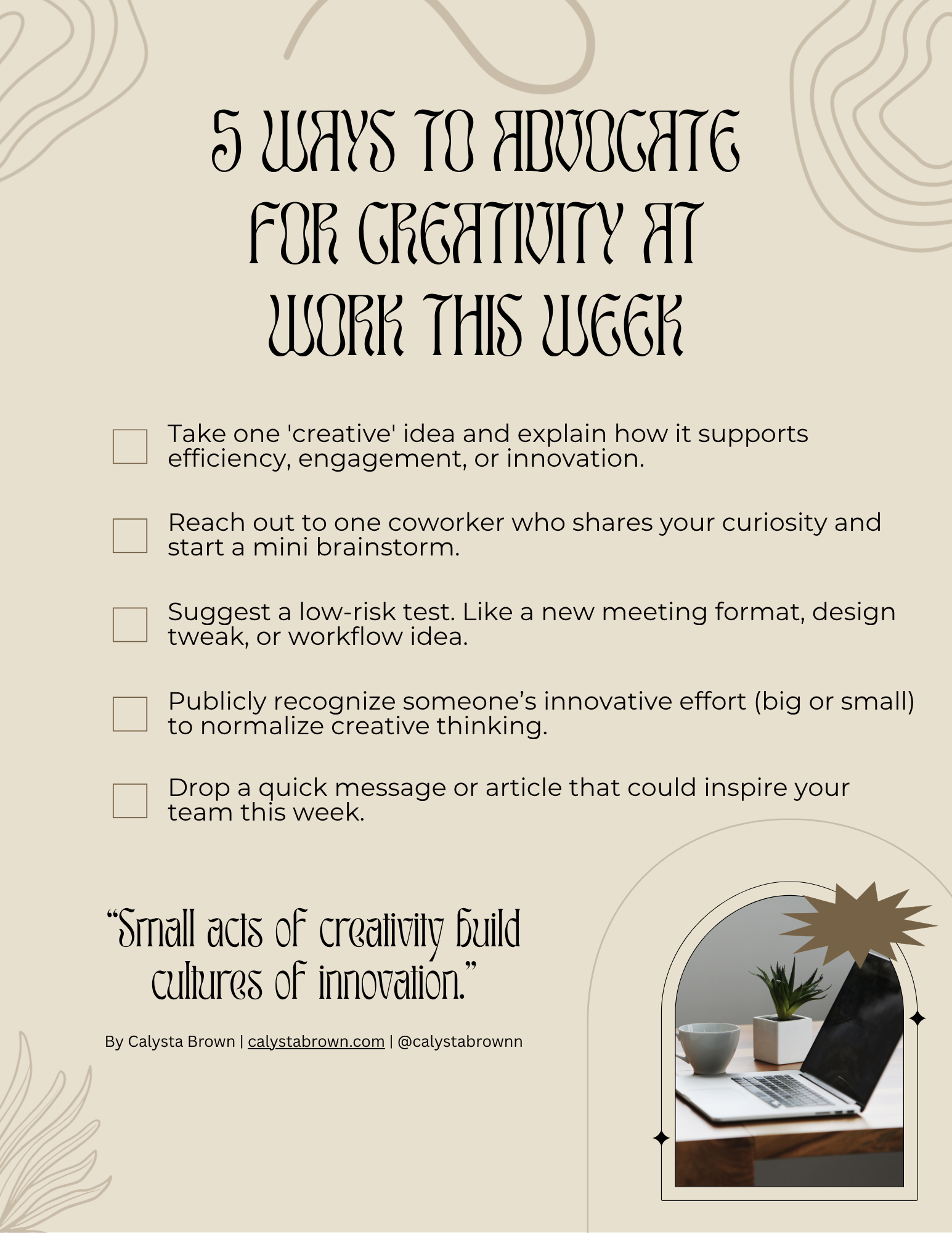
Below, you can download a checklist of simple ways to advocate for creativity at work this week.
Until Next Time,
Callie
 Nine to Thrive.
Leave a comment