
This post will be a spin-off of my leadership series from last week. I mentioned ‘leadership styles’ many times throughout the posts, so I decided to expand a little more on the topic. At the beginning of this blog journey, I wrote a few posts on self-discovery. Well, figuring out your personality type is like figuring out your leadership type. There is no right or wrong answer because everyone is unique in their own way.
Let’s get into it!
What Is A Leadership Style?
A leadership style is the set of behaviors, strategies, and decision-making processes a leader uses to guide, motivate, and manage their team. These ‘styles’ are usually influenced by personality, values, and experience and significantly impact a team’s success. Because everyone has a different personality type, there are many different ways to lead people. Hence, there are many different leadership styles that leaders can mix and match.
The Most Popular Leadership Styles
There are 11 common leadership styles, but I will only discuss 6.
1. Autocratic Leadership
Also called “authoritarian”, this type of leadership is characterized by someone who focuses primarily on results and team efficiency. These leaders often make decisions on their own and expect their employees to do exactly as they ask.
2. Bureaucratic Leadership
These leaders are similar to the one above in that they expect their team to follow the rules precisely as written. This rule focuses on fixed duties within a hierarchical system with little need for collaboration.
3. Coaching Leadership
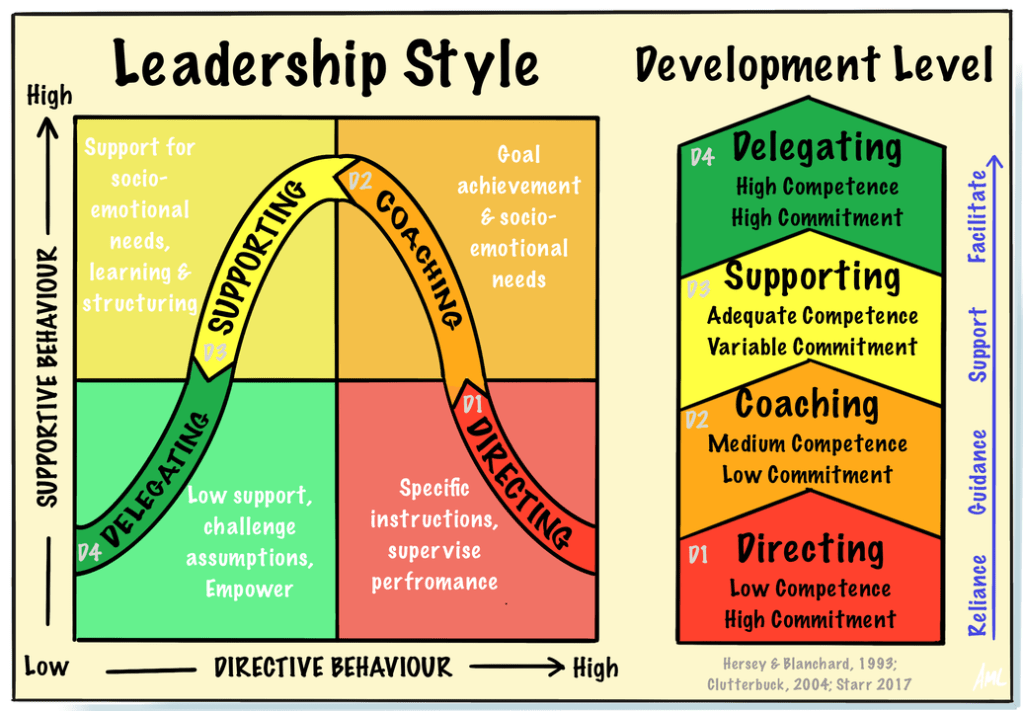
A leader who uses this style can quickly recognize their team’s strengths, weaknesses, and motivations, helping improve each individual. This type of leadership uses SMART goals and provides regular feedback.
4. Democratic Leadership
Also known as the “participative style”, this type of leader asks their team for input and considers feedback before making a decision. A democratic leader is often credited with fostering higher levels of employee engagement and workplace satisfaction because their team members feel their contributions matter.
5. Laissez-faire Leadership
This style is at the opposite end of the autocratic spectrum. This leader focuses on delegating tasks and provides little supervision. Because this type of leader spends little time with employees, they have more time for additional projects.
6. Transformational Leadership
Finally, this style focuses on empowering followers by inspiring them to reach their full potential. These leaders are encouraging, innovative, and creative. Unlike hands-off approaches, they actively engage with their teams, offer guidance, and opportunities for growth.
So, what’s your leadership style?
It’s important to adopt a leadership style because it’s a trait all effective leaders share. Developing your signature style is part of becoming a leader. It helps your coworkers know what to expect from you and how you work best, and it reduces workplace frustration.
Don’t know your leadership style? Don’t worry, of course, I found a quiz you can take! Take this short assessment to see which style best fits you. Comment down below your results!
Until next time,
Callie
 Nine to Thrive.
Leave a comment